509-315-9840

Impacted Canines: How Orthodontics Brings Them into Place


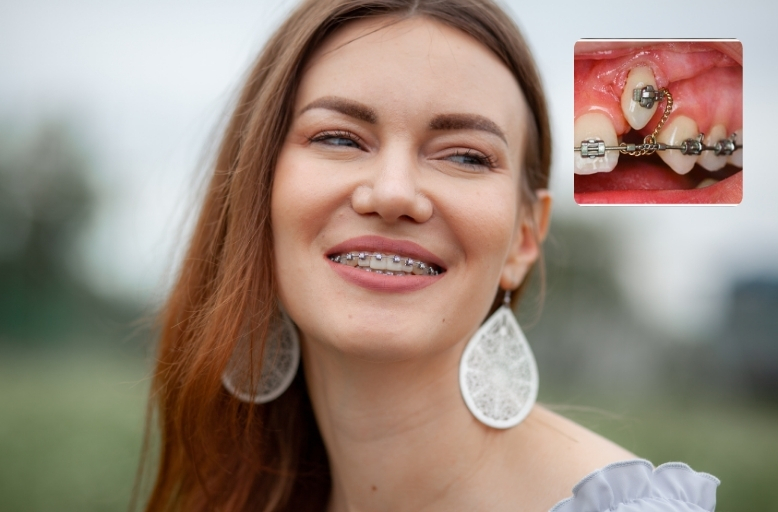
Did you know that an impacted canine can disrupt your smile, causing both cosmetic and functional issues? A tooth that fails to emerge properly from the gums can lead to misalignment, uneven bites, and even damage to neighboring teeth. Impacted canines are one of the most common dental concerns among teens and adults, but with the right orthodontic treatment, they can be effectively managed.
In this blog, we’ll explore the causes of impacted canines, how orthodontic dental treatment can guide them into their proper position, and the benefits of early intervention. If you’re dealing with this dental issue, keep reading to learn how Dr. C Orthodontics can help you achieve a healthy, functional smile.
What Are Impacted Canines?
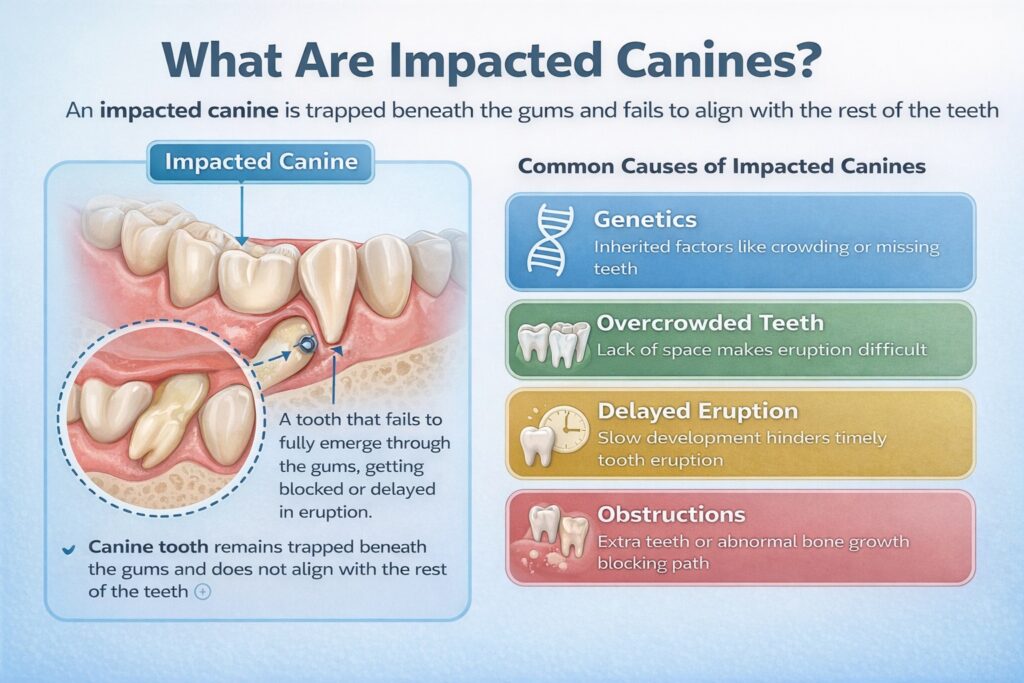
An impacted canine is a tooth that has failed to fully emerge through the gums and is blocked or delayed in eruption. Typically, the canine tooth, often referred to as the “cuspid”, is one of the last teeth to come in during childhood. However, in some cases, this tooth becomes impacted, meaning it remains trapped beneath the gums, failing to align with the rest of the teeth.
Common Causes of Impacted Canines
There are several reasons why canines might become impacted. Some of the most common causes include:
- Genetics: Inherited factors play a major role. If your family has a history of dental issues, such as crowding or missing teeth, you may be more prone to having impacted canines.
- Overcrowded Teeth: When there isn’t enough space in the mouth due to overcrowding, the canines may fail to find an open path to emerge.
- Delayed Eruption: Sometimes, teeth simply take longer to emerge than expected, especially if the surrounding teeth are misaligned.
- Obstructions: The presence of an extra tooth or abnormal bone growth can block the canine’s eruption path, causing impaction.
Consequences of Impacted Canines
An untreated impacted canine can lead to a host of dental issues. These include:
- Misalignment: The impacted tooth may push against surrounding teeth, causing them to shift and resulting in an uneven bite or crooked teeth.
- Damage to Adjacent Teeth: Impacted canines can cause damage to nearby teeth, affecting their positioning and health.
- Cyst Formation: In rare cases, the impacted tooth can cause cysts to form around it, leading to further dental complications.
- Difficulty in Oral Care: Misaligned or impacted canines can make brushing and flossing difficult, increasing the risk of gum disease and cavities.
Addressing impacted canines early is essential to avoid these complications and ensure a healthy smile.
How Orthodontics Can Help Move Impacted Canines
Orthodontic treatment is often the best option for guiding impacted canines into their correct position. Here’s how orthodontic dental treatment in Spokane Valley can help:
Video Source: American Association of Oral and Maxillofacial Surgeons (AAOMS)
Caption: Watch how impacted canines are treated using orthodontic and surgical techniques to restore proper alignment and improve oral health.
Orthodontic Treatment Options
When it comes to treating impacted canines, there are a variety of orthodontic solutions that can be used, depending on the severity of the case:
- Braces: Traditional metal braces are a common and effective method to move impacted canines. They gradually shift the position of teeth, including the impacted canine, into the proper alignment.
- Clear Aligners: For milder cases of impacted canines, clear aligners like Invisalign may be an option. These custom-made trays are discreet and comfortable, slowly moving the impacted tooth into place.
- Surgical Exposure and Bonding: In some cases, a minor surgical procedure may be needed to expose the impacted tooth. Once exposed, the orthodontist can attach a small chain or bracket to the tooth to gradually guide it into position.
The Process of Moving Impacted Canines
Here’s how the treatment process typically works:
- Initial Consultation: During your first visit, the orthodontist at Dr. C Orthodontics will take X-rays to assess the position of the impacted canine. Based on this information, they’ll create a personalized treatment plan.
- Braces/Aligners Application: If braces are used, they will be placed on your teeth, with adjustments made periodically to move the impacted canine. In some cases, clear aligners may be recommended for a less noticeable approach.
- Surgical Exposure (if necessary): If the canine remains stuck beneath the gums, the orthodontist may recommend a minor surgical procedure to expose it. Once exposed, a small bracket or chain will be attached to the tooth, which will be gradually pulled into place.
- Maintenance and Follow-up: Once the canine is in position, additional orthodontic treatments may be used to refine your bite and maintain the alignment.
Specialized Techniques for Impacted Canines
In addition to traditional methods, advanced techniques like exposure and bonding can help achieve better results, especially when the tooth is deeply impacted. This ensures that the canine tooth emerges in the correct position and maintains long-term alignment with surrounding teeth.
Benefits of Treating Impacted Canines Early
Improved Functionality
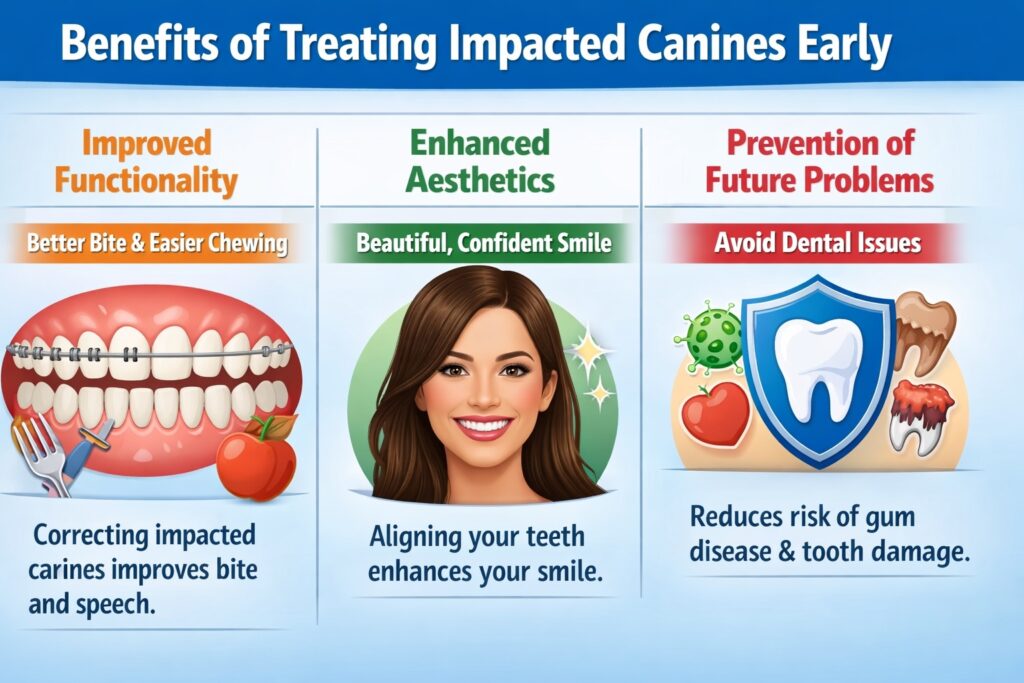
Early treatment of impacted canines restores the functionality of your bite. When teeth are properly aligned, they work together more effectively, making tasks like chewing and speaking much easier. Addressing impacted canines early can prevent the development of more severe dental problems.
Enhanced Aesthetics
The appearance of your smile is directly impacted by the alignment of your teeth. By moving an impacted canine into its proper position, orthodontic treatment can enhance the symmetry of your smile, giving you more confidence and improving your overall appearance.
Prevention of Future Problems
Timely intervention with orthodontic dental treatment in Spokane Valley not only improves your smile but also prevents future complications. Aligning impacted canines can reduce the risk of developing gum disease, tooth decay, or damage to neighboring teeth. It also helps maintain proper oral hygiene, making it easier to clean your teeth and gums.
What to Expect During Treatment for Impacted Canines
Initial Consultation
Your journey to correcting impacted canines begins with an initial consultation at Dr. C Orthodontics. During this visit, the orthodontist will evaluate your dental health, take X-rays, and discuss your treatment options. This is a great time to ask any questions about the process and set expectations.
Duration of Treatment
The length of treatment depends on the severity of the impaction and the method chosen. Typically, treatment with braces for impacted canines can take anywhere from 12 to 24 months. If surgery is required, the overall treatment timeline may be longer, but your orthodontist will guide you through the process.
Possible Adjustments
Throughout your treatment, you may need to make a few lifestyle adjustments. This can include wearing rubber bands or adjusting to a new eating routine. The orthodontist will provide instructions on how to take care of your braces or aligners and monitor your progress regularly.
When to Seek Treatment for Impacted Canines
Signs to Watch For
Some signs that indicate a canine may be impacted include:
- Delayed eruption: The canine fails to emerge by the expected age (usually by age 13).
- Pain or tenderness: You may feel pain or swelling around the gum area where the impacted tooth is located.
- Misalignment of adjacent teeth: Impacted canines can push nearby teeth out of place, resulting in crooked or overlapping teeth.
Ideal Age for Treatment
Orthodontic dental treatment is most effective when the treatment begins before the canines are fully impacted. In most cases, the ideal time to address impacted canines is during the teen years, as the teeth are still developing and can be moved more easily. However, adults can also benefit from treatment to correct impacted canines.
Dealing with impacted canines doesn’t have to be stressful. With the right orthodontic treatment from Dr. C Orthodontics, you can restore your smile to its full potential. By addressing this issue early, you’ll improve your bite, appearance, and overall oral health.
If you suspect you have impacted canines, don’t wait. Schedule a consultation with Dr. C Orthodontics today to learn how we can help you achieve a healthy, beautiful smile.
Common Questions About Impacted Canines
How do impacted canines affect my oral health?
Impacted canines can cause misalignment, damage to neighboring teeth, and difficulty in maintaining oral hygiene, leading to potential gum disease or cavities.
How long does it take to treat impacted canines with braces?
Treatment usually takes 12 to 24 months, depending on the severity of the impaction and the chosen orthodontic solution.
Can impacted canines affect the rest of my teeth?
Yes, they can cause misalignment of adjacent teeth, leading to overcrowding, crooked teeth, and bite problems.
What is the best age to treat impacted canines?
Treatment is most effective during adolescence when the teeth are still developing, though adults can also benefit from orthodontic treatment for impacted canines.
Can impacted canines affect my bite?
Yes, impacted canines can cause bite misalignment, leading to uneven wear on teeth and difficulty in chewing or speaking.